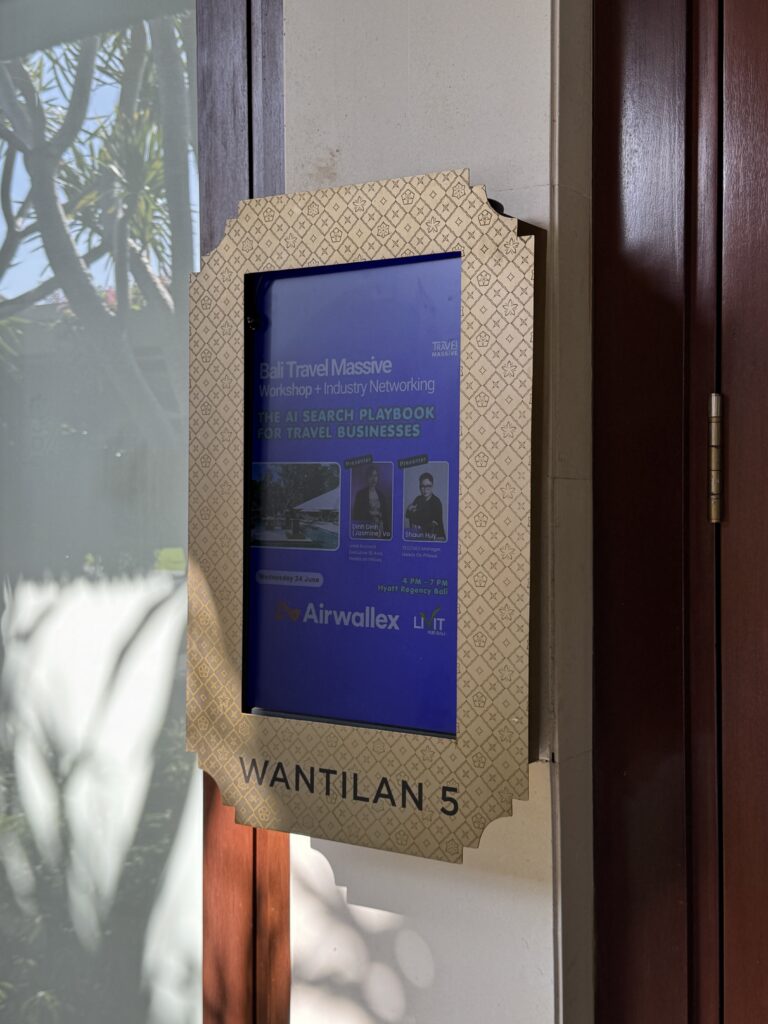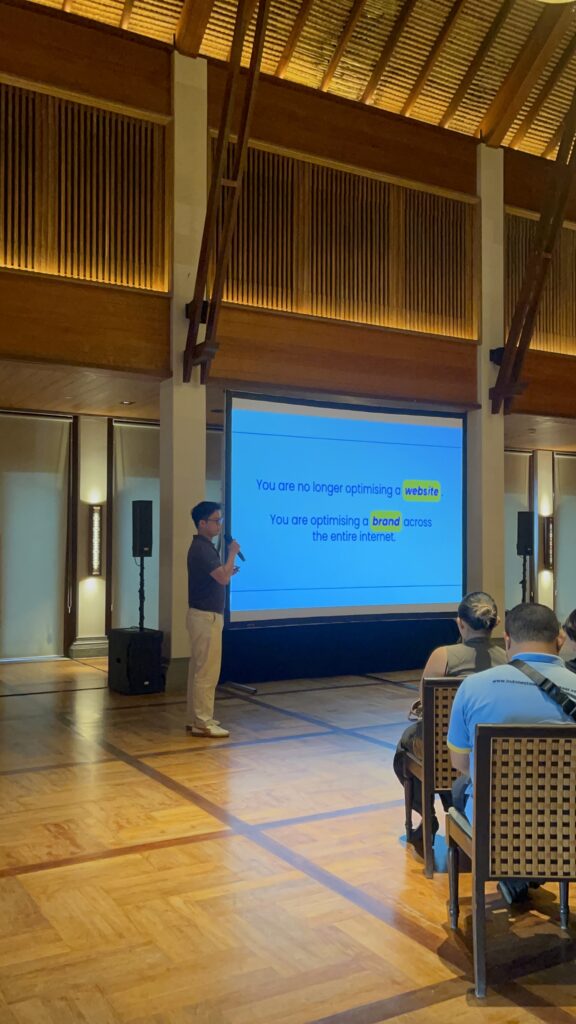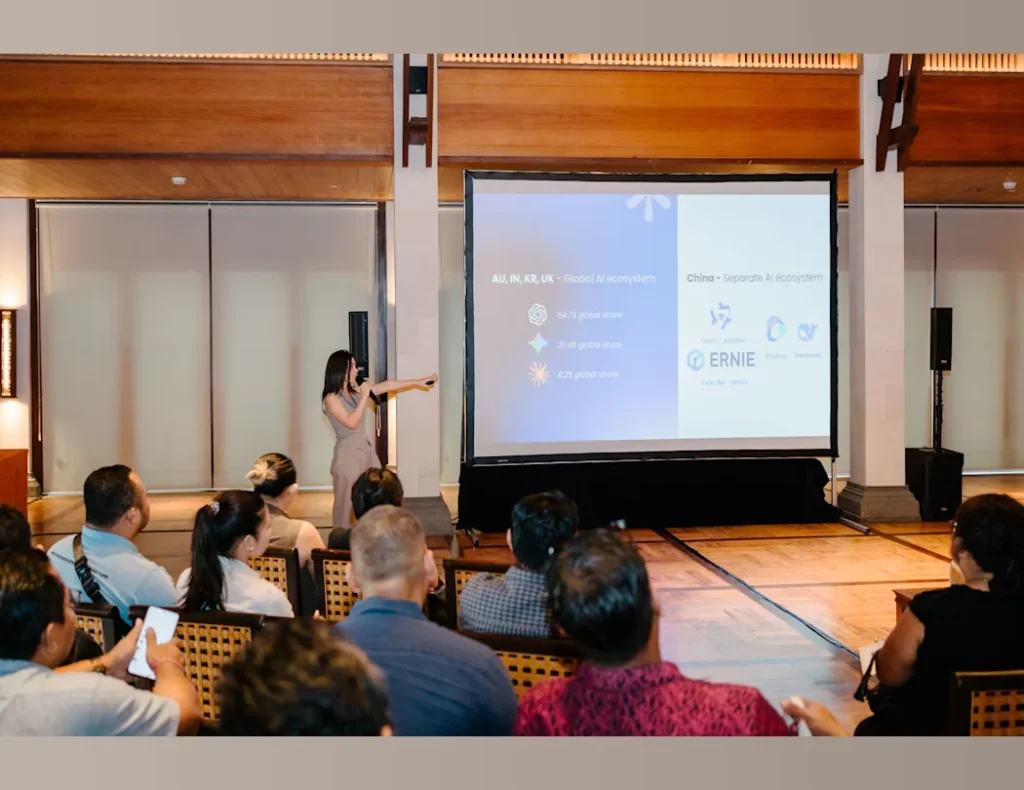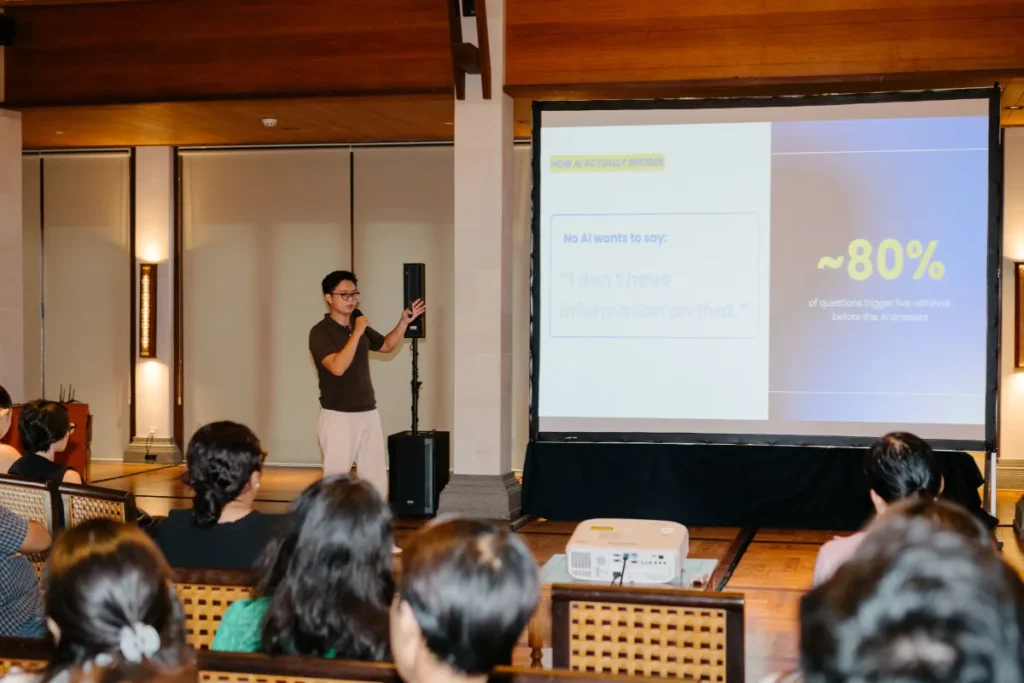
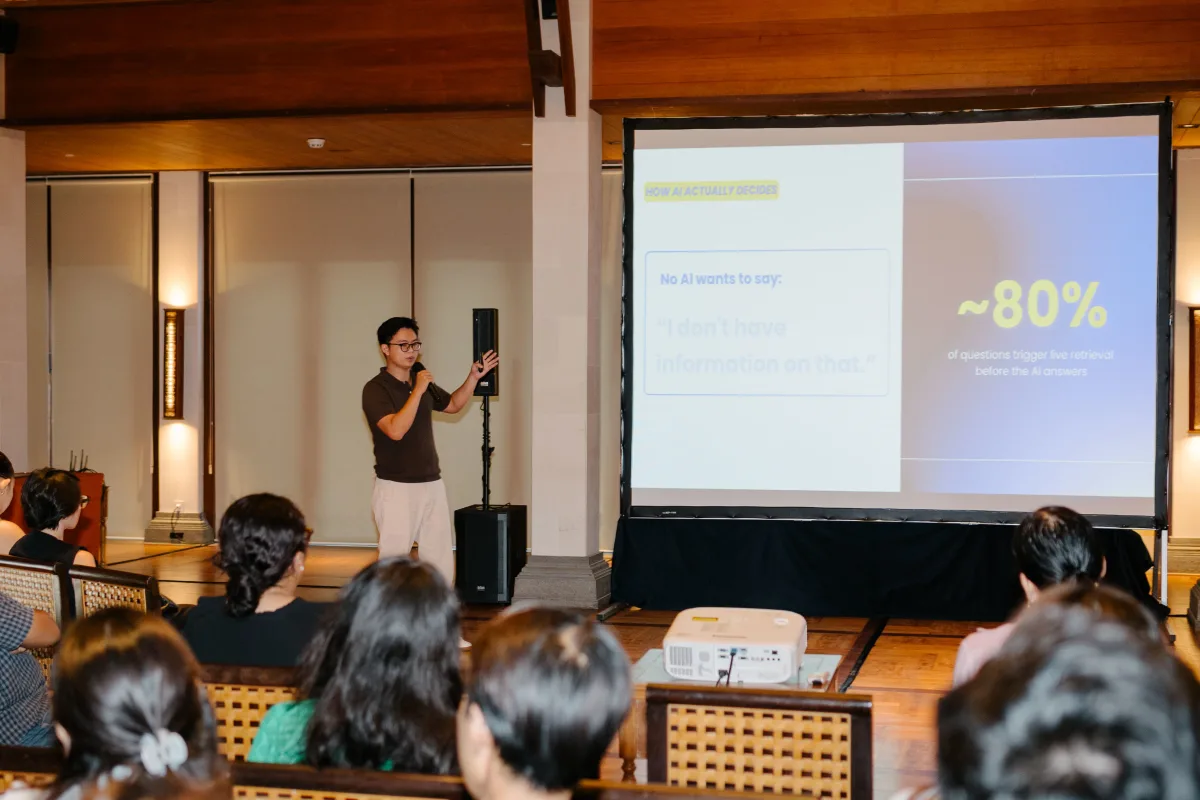
Last week I had the chance to speak at Travel Massive Bali, hosted at Hyatt Regency Bali in Sanur and sponsored by Airwallex, alongside my colleague Jasmine Vo (Lead Account Executive, SE Asia). Around 50 travel and hospitality professionals from across Bali joined us for a workshop we called “Found vs Chosen: How travel businesses win guests in the age of AI search.”
The core idea we wanted to leave people with: SEO gets you found. GEO gets you chosen. They’re different games, with different mindsets and different scoreboards.
What we covered
The behaviour shift is already here. 80% of travellers are using AI tools to plan trips, and zero-click rates now range from 60% on traditional search up to 93% on Google’s AI Mode. Guests aren’t just searching anymore — they’re asking AI, and the answer they get may or may not include you.
Why GEO breaks the old playbook. Traditional SEO optimises one asset you control — your website. GEO means optimising your brand across the entire internet, because AI pulls from sources you don’t own to build its answer. That also means measurement breaks: a guest who discovers you through ChatGPT and books three days later will show up in your analytics as “direct traffic,” not as an AI referral.
How AI actually decides who gets recommended. We walked through the mechanics: AI rarely says “I don’t know” — it retrieves information, compares sources, and defaults to whichever brand it can be most certain about. That certainty is built from four things: information coverage (how much relevant content exists about you, branded and non-branded), added value (content that isn’t redundant with everything else already out there), repetition (showing up consistently alongside your category), and consistency (the same facts, presented the same way, everywhere).
A practical playbook attendees could take home, including the “mirror test” (ask ChatGPT/Gemini/Perplexity about your own property and see who gets named and cited), turning vague adjectives into verifiable facts, mapping the five problem patterns guests actually have, and measuring GEO as a system rather than a single channel.
We also shared real results from our own client work – including a +1,674% increase in new users from AI platforms for LuxeIndonesia Travel and a +3,291% increase in AI search sessions for Pullman Danang Beach Resort – to show this isn’t theoretical; it’s already shifting where bookings come from.
Big thanks to Natalya Wissink and the Bali Travel Massive team for organising, to Airwallex for sponsoring, and to Livit Hub Bali for community support. And thank you to everyone who stayed for the networking afterwards and kept the conversation going — it’s clear this topic is front of mind for a lot of travel businesses right now.
If you want to run the “mirror test” on your own brand or talk through how GEO applies to your property, feel free to reach out.